
From The Bunker to Still Breathing: How a Small Idea Became a Much More Ambitious Game
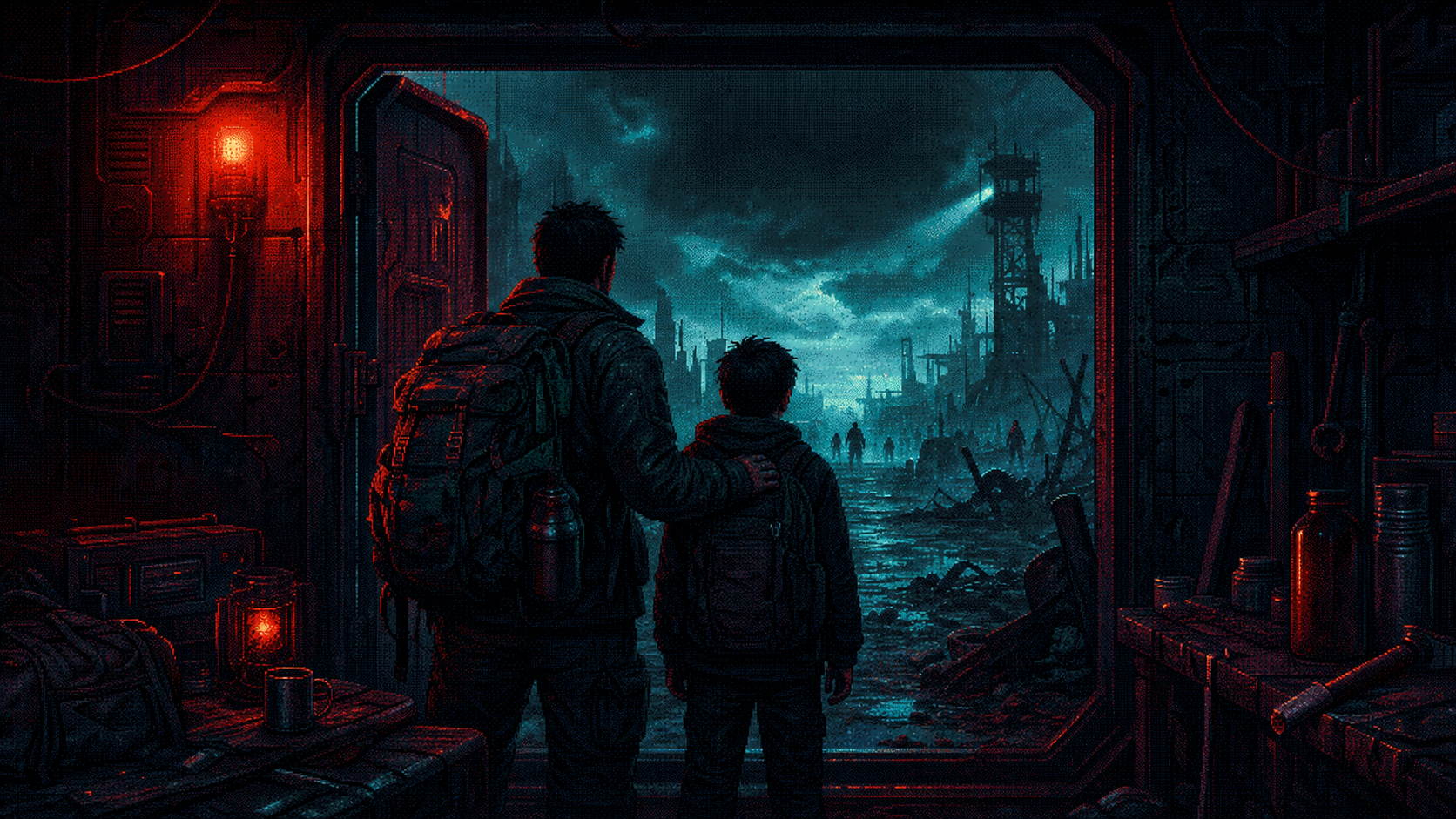
"The Bunker was the beginning. Still Breathing is everything we discovered that idea could become."
The narrative experience created for a Game Jam was only the beginning. With Still Breathing, we have expanded the concept with 3D exploration, survival, combat, cards, crafting and a much deeper story.
Still Breathing is one of the most special projects my son and I have developed together under the Dad & Son Games label. Although we belong to different generations, we share the same passion for video games. I bring the experience of growing up with the classics, while he brings a perspective much closer to today's games and players. That combination has shaped many of the decisions we have made throughout development.
Films, TV series, comics, books and, of course, video games have always been a major part of our lives. For us, the most important thing was to tell a story capable of conveying everything we wanted to express. That dream went through several stages and eventually became our most ambitious project yet.
The Origin of The Bunker
Before Still Breathing, our first project was called The Wall. Inside it, we created a small minigame—almost an experiment—about a family trapped in a bunker. The idea was simple: manage their daily lives, ration limited resources and make decisions that could affect the survival of every family member.
When Game Jolt announced a narrative Game Jam, we recovered that idea, expanded it, added a story and turned it into an independent game. That is how The Bunker was born.
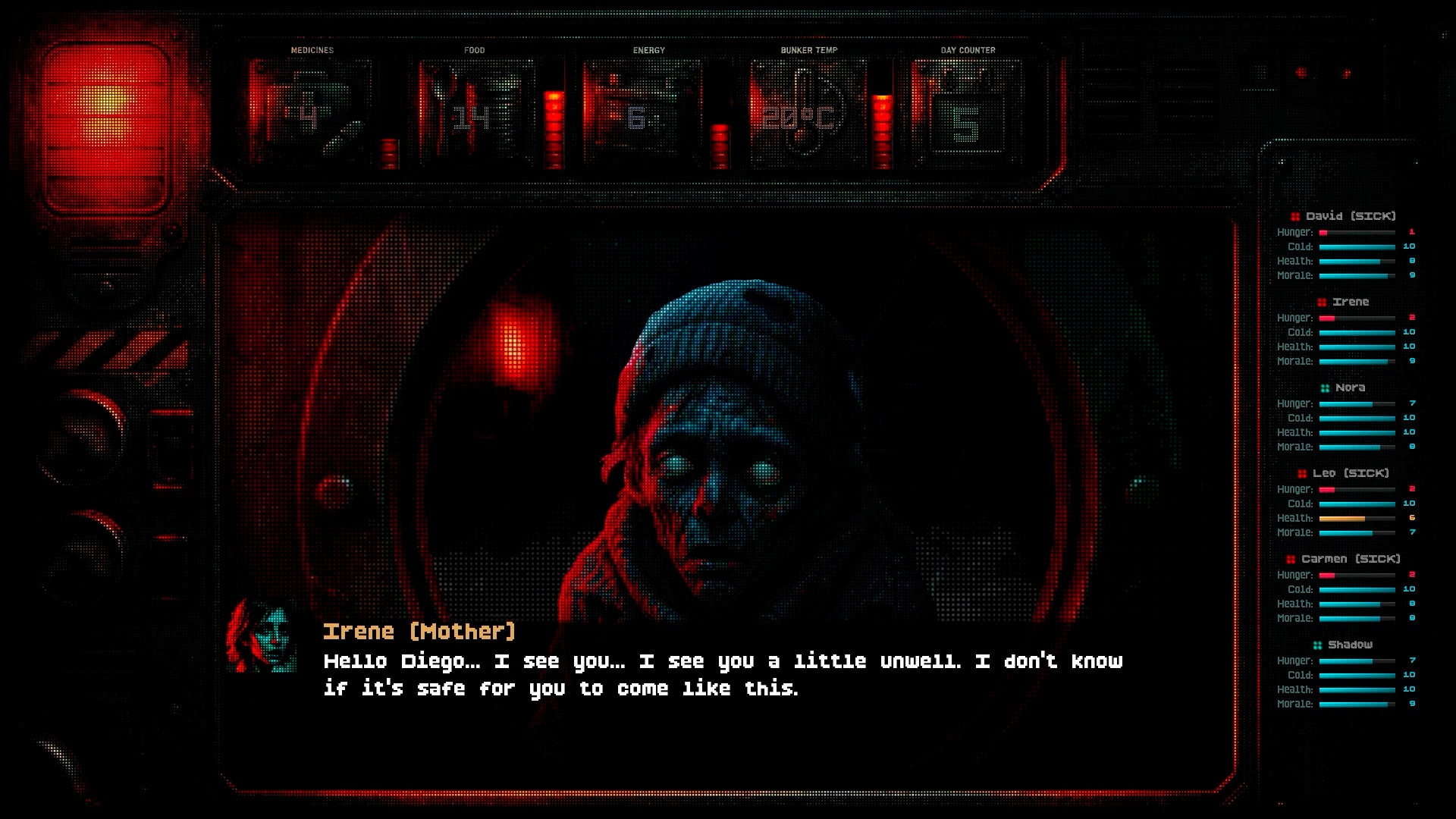
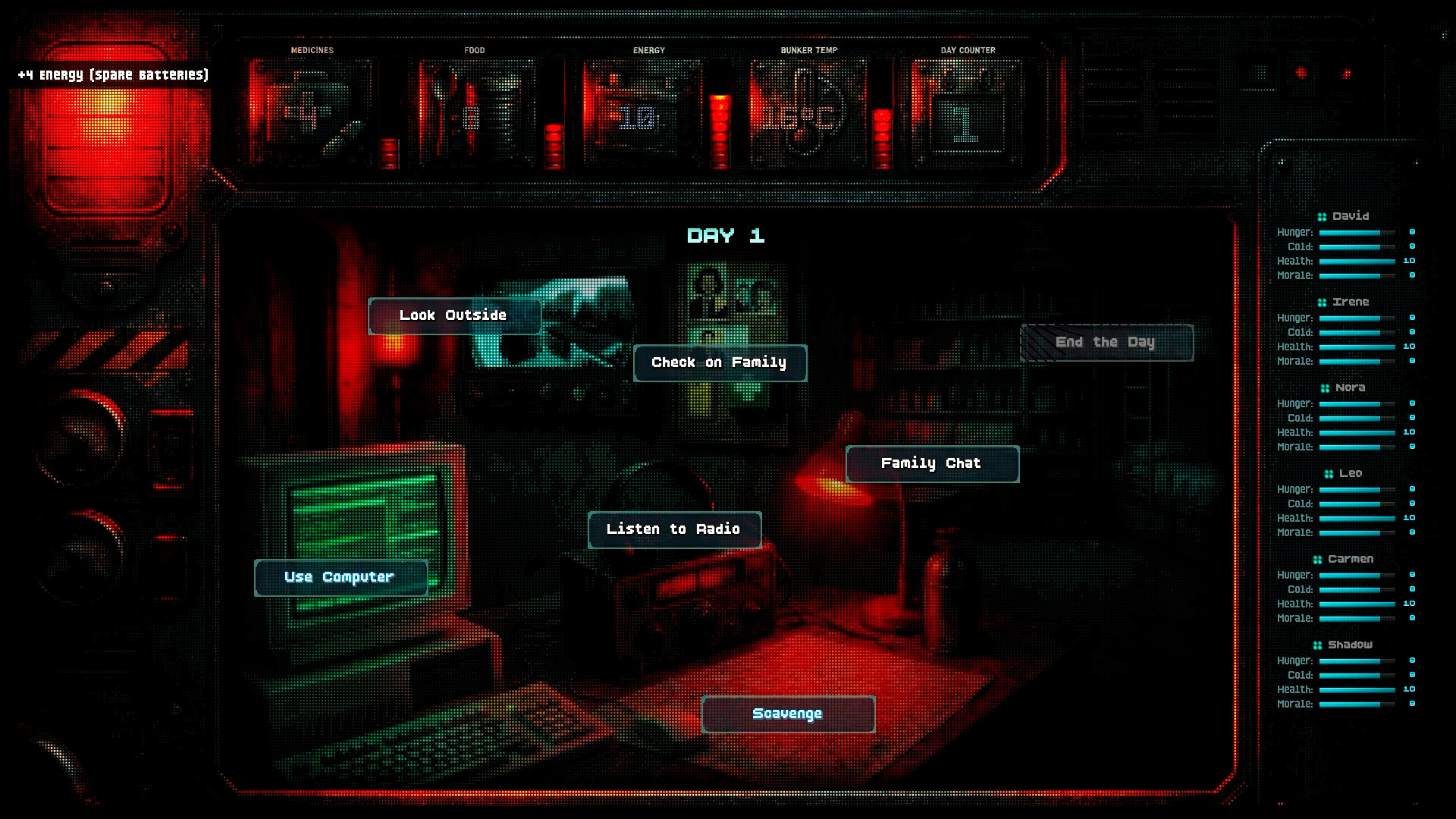
We developed that first version in Ren'Py, an engine especially well suited to narrative experiences built around conversations, choices and moral decisions. The Game Jam gave us two months of intense work, many late nights and plenty of coffee.
The game was heavily inspired by titles we love, such as This War of Mine and 60 Seconds!, but we wanted to bring our own perspective. The protagonists would not simply be a group of survivors: they would be a family, with their own problems, relationships and ways of facing an extreme situation together.
The Bunker took first place in the Game Jolt narrative category—and made us realise the idea could go much further.
A Narrative Foundation We Wanted to Expand
Ren'Py let us focus on what mattered most at that stage: telling a story and ensuring the player's decisions had consequences. But after the Game Jam, we began imagining new possibilities.
We wanted players to leave the shelter, explore the outside world, face dangers, search for resources and gradually discover what had happened. We also wanted combat, crafting and survival systems that would let the player interact with the world more directly.
That led to an important decision: move the project to Godot and rebuild it on a much more ambitious foundation. The change was not simply a port. It meant reconstructing much of the project and reconsidering what the game could become.
The Birth of Still Breathing
With the new engine, the project began to grow considerably. Narrative remained fundamental, but now we could combine it with many more mechanics. What began as a story-driven experience about managing a family inside a shelter evolved into a much broader game.
Still Breathing now includes:
- Exploration across 3D environments
- Combat and encounters with different threats
- Resource management and survival
- Crafting tools and items
- A card-based system
- New mechanics inside and outside the shelter
- More complex, unsettling and disturbing stories
- More decisions and consequences for the family
We did not want to abandon what made The Bunker special. The family, their relationships and the moral decisions remain essential. The difference is that those choices now belong to a deeper experience in which the player must act directly, explore the world and confront what waits beyond the shelter.
Much More Than an Expanded Version
Still Breathing is not simply a larger version of The Bunker. It is a complete reinterpretation of that original idea. We have kept its narrative foundation and integrated it into a game with many more possibilities, systems and ways to play.
The player will not only decide how to distribute resources or respond to a family conflict. They will also leave the safety of the shelter, explore unknown locations, craft what they need to survive and face situations in which every decision may have consequences.
We do not want stories to appear only through dialogue. They should also emerge from what happens during an expedition: the resources we fail to find, an injury, a wrong decision or someone knocking on the door at the worst possible moment.
The Family Remains at the Heart of Everything
We do not want the characters to feel like simple numbers, abilities or resources. We want them to be afraid, to argue, to suffer and to react to what happens around them. We want the player's decisions to affect how they relate to one another—and for the loss of one family member to leave a real absence in the lives of the others.
Survival matters, but so does how you survived—and what you lost along the way.
When we recovered that small minigame from The Wall for a Game Jam, we never imagined how far it would go. First it became The Bunker, an experience focused on narrative and moral decisions. Moving to Godot then allowed us to introduce new mechanics and create something deeper, more intense and more ambitious.
The Bunker was the beginning. Still Breathing is everything we discovered that idea could become.
COMMENTS